Changing your furnace filter regularly is one of the simplest ways to help maintain your home's heating system. A dirty filter can restrict airflow, reduce heating performance, and contribute to furnace problems during cold weather.
For homeowners in St. Louis, Missouri, checking the furnace filter before and during winter can help keep the heating system running properly when temperatures drop.
But how often should you replace your furnace filter? The answer depends on the type of filter you use, your household, and how frequently your heating system runs.
How Often Should You Replace a Furnace Filter?
Most disposable furnace filters need replacement every 1 to 3 months, but some require more frequent changes. Always follow the filter manufacturer's recommendations and check the filter regularly.
Here is a general guide:
-
Every 30 days: Some basic fiberglass filters and filters in homes with heavy dust or high usage.
-
Every 60 days: Some standard pleated filters under typical household conditions.
-
Every 90 days: Some pleated filters designed for longer use in homes with relatively low dust levels.
-
More frequently when needed: Homes with pets, ongoing construction, heavy dust, or other conditions that cause filters to become dirty faster.
These timeframes are general estimates, not fixed rules. The correct replacement schedule depends on your specific filter and furnace.
5 Signs Your Furnace Filter Needs Changing
You do not always need to wait until the end of a recommended replacement period. Check your filter for these warning signs.
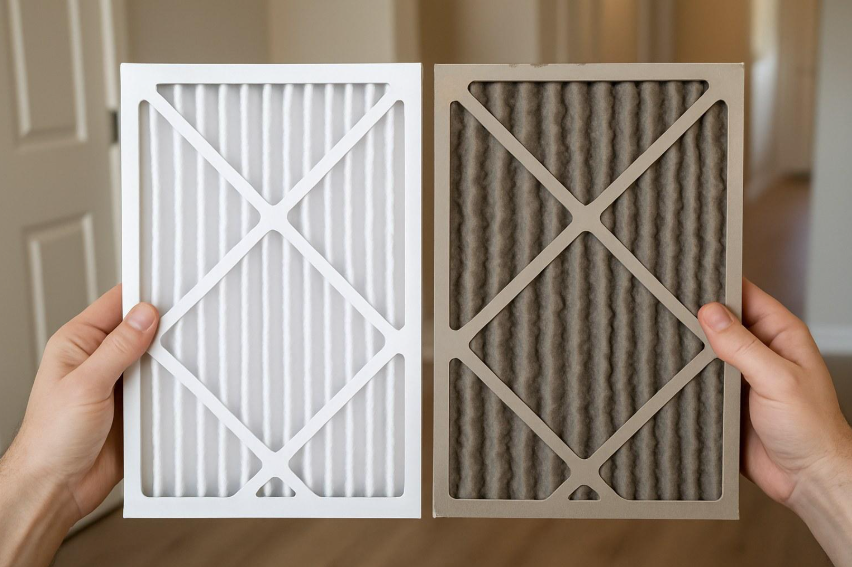
1. The Filter Looks Dirty or Clogged
A visibly dirty filter may have collected enough dust and debris to restrict airflow. If you can no longer see the filter material clearly through the accumulated dirt, check the manufacturer's guidance and replace it when appropriate.
Do not wait for the filter to become completely blocked before changing it.
2. Airflow From Your Vents Seems Weak
If airflow from several vents has decreased, a clogged filter could be one possible cause.
Check the filter and make sure furniture or other objects are not blocking supply and return vents. If airflow remains weak after replacing a dirty filter, the problem may involve the blower, ductwork, or another system component.
3. Your Furnace Runs Longer Than Usual
A restricted filter can reduce airflow and affect how efficiently your heating system operates.
If your furnace seems to run longer than normal, inspect the filter. However, longer heating cycles can also result from colder outdoor temperatures, thermostat settings, poor insulation, or other problems.
4. Your Home Has More Dust Than Usual
A dirty filter may be less effective at capturing airborne particles, depending on its condition and design.
If dust accumulates quickly around your home, check the filter and consider other possible sources, such as open windows, pets, or construction work.
Remember that a furnace filter is not a complete solution for every indoor air quality concern.
5. Your Furnace Overheats or Shuts Down Repeatedly
A severely clogged filter can restrict airflow enough to cause some furnaces to overheat and shut off their burners as a safety measure.
If your furnace repeatedly shuts down, replacing a dirty filter may help, but do not assume it is the only cause. Arrange for professional inspection if the problem continues.
How to Change a Furnace Filter
Many homeowners can replace a standard disposable furnace filter by following a few simple steps.
Step 1: Turn off the heating system.
Follow your furnace manufacturer's instructions before accessing the filter compartment.
Step 2: Locate the filter.
The filter is often near the furnace's return-air duct or inside a designated filter slot. Some systems use a different arrangement.
Step 3: Check the filter size.
Look at the dimensions printed on the existing filter. Replacement filters should match the required size and specifications for your system.
Step 4: Check the airflow arrow.
Many filters have an arrow showing the direction of airflow. Install the filter according to the markings on the furnace or filter compartment.
Step 5: Install the new filter securely.
Make sure the filter fits properly without large gaps or bending.
Step 6: Restore operation and check the system.
Close any access panels and restart the heating system according to the manufacturer's instructions.
If the filter is difficult to access or your system uses a specialized filtration arrangement, consult an HVAC professional.
Which Furnace Filter Should You Use?
Not all furnace filters are the same. Choosing a filter involves balancing filtration needs with the airflow requirements of your heating system.
Fiberglass Filters
Basic fiberglass filters are generally inexpensive and designed primarily to capture larger airborne particles. They often need more frequent replacement.
Pleated Filters
Pleated filters have a larger filtering surface and are available in different filtration ratings. Their replacement intervals depend on the specific product and household conditions.
High-Efficiency Filters
Higher-rated filters can capture smaller particles, but not every furnace is designed to handle every filter's airflow resistance.
Before installing a higher-rated filter, check your furnace manufacturer's recommendations. An unsuitable filter can restrict airflow and affect system performance.
Can a Dirty Furnace Filter Increase Heating Costs?
It can. When a filter becomes significantly clogged, restricted airflow may cause the heating system to operate less effectively. In some circumstances, this can increase energy use or contribute to unnecessary wear.
The actual effect depends on the furnace design, filter condition, and other factors affecting your home's heating demand.
Regularly inspecting and replacing the filter is a simple maintenance step that can help support proper airflow and reliable operation.
Furnace Filter Maintenance During St. Louis Winters
St. Louis homeowners often use their heating systems regularly during colder months. As the furnace runs more frequently, its filter can collect dust and other airborne particles.
Consider these maintenance habits:
-
Inspect the filter monthly during periods of heavy heating use.
-
Replace it according to its condition and the manufacturer's schedule.
-
Keep return-air vents clear of furniture and other obstructions.
-
Arrange routine professional maintenance for your heating system.
-
Pay attention to unusual noises, reduced airflow, or repeated furnace shutdowns.
These steps can help you identify problems early and maintain more consistent heating throughout your home.
When Should You Call an HVAC Professional?
Changing a furnace filter is straightforward, but some heating problems require professional attention.
Contact an HVAC professional if your furnace continues overheating, shuts down repeatedly, produces unusual noises, or fails to heat your home properly after you replace a dirty filter.
A technician can inspect the furnace, check airflow, and determine whether another component needs attention.
American Heating & Air Conditioning provides heating services for residential and commercial properties in St. Louis and nearby communities.
If your heating system is not performing as expected, contact American Heating & Air Conditioning to discuss your concerns and arrange service.
Frequently Asked Questions
Can I change my furnace filter every month?
Yes, if the filter's specifications and your household conditions call for monthly replacement. Some filters can last longer, so follow the manufacturer's instructions and inspect the filter regularly.
What happens if I never change my furnace filter?
A neglected filter can become clogged, restricting airflow and potentially contributing to overheating, reduced heating performance, or additional system strain.
Does a thicker furnace filter last longer?
Not necessarily. Filter thickness alone does not determine its lifespan. Filter design, surface area, filtration rating, airflow, and household conditions all matter.
Should I turn off my furnace before changing the filter?
Follow the manufacturer's instructions. Turning off the system before accessing the filter is a sensible precaution for many residential furnaces.
Can the wrong furnace filter damage my heating system?
A filter that does not fit correctly or restricts airflow beyond what the system can handle may cause performance problems. Always use a filter that meets the furnace manufacturer's specifications.
Keep Your Furnace Running Properly
Regular filter replacement is a simple way to help maintain airflow and support reliable heating during cold weather.
For furnace maintenance, heating repairs, and other HVAC services in St. Louis, Missouri, contact American Heating & Air Conditioning for assistance with your home's heating system.